

Quick Summary
To choose outdoor dining chairs for a windy patio, judge each chair by its weight, frame stability and how much surface it presents to the air. Heavier materials like solid teak resist tipping better than light aluminum-and-rattan frames. Pair any lighter chair with a heavy table and a securing method, and move everything indoors when a storm watch is issued.
- Judge each chair by weight, frame stability and surface area exposed to wind.
- Solid teak chairs weigh 25-40 lb and are the most wind-stable natural option.
- Powder-coated aluminum with synthetic rattan weighs 12-20 lb and needs anchoring in gusts above 20 mph.
- Place two 15-20 lb sandbags per chair on an exposed terrace for everyday gust protection.
- Move chairs and cushions indoors when a tropical storm or hurricane watch is issued.
Table of Contents
- Why Wind Changes the Way You Choose Outdoor Dining Chairs
- Choosing Heavy Outdoor Dining Chairs for Wind
- Comparing Materials: Rattan, Aluminum and Teak Under Wind and Salt Air
- Powder-Coated Aluminum Patio Furniture: Strength Without the Weight
- Best Material for Outdoor Furniture Cushions in Windy, Humid Miami
- How to Secure Patio Furniture in High Winds
- Choosing Your Windy-Patio Dining Set Before You Order
- Frequently Asked Questions
Why Wind Changes the Way You Choose Outdoor Dining Chairs
Last Updated: November 19, 2026
Choosing outdoor dining chairs for a windy patio starts with a simple question: will the chair still be where you left it tomorrow?
Dining chairs are a different problem than lounge chairs. Upright dining chairs are optimized for meals lasting 60 to 120 minutes (ergonomic guidelines for outdoor dining chair selection), and for that length of time, a guest leans back, shifts weight and pushes away from the table.
This is why we recommend judging each chair by three things: weight, frame stability and how much surface it presents to the air. Keep those in mind as you read the rest of this guide.
Choosing Heavy Outdoor Dining Chairs for Wind
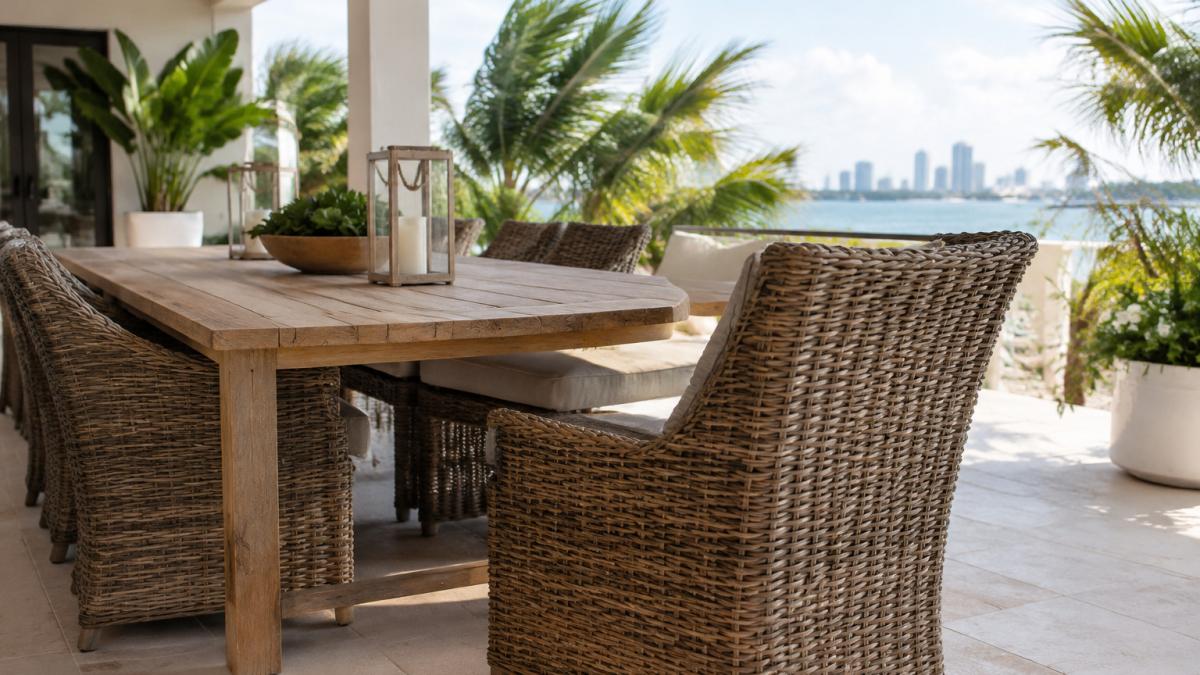
A chair with a solid frame and a stable base is less likely to tip when someone stands up or when a breeze catches the backrest.
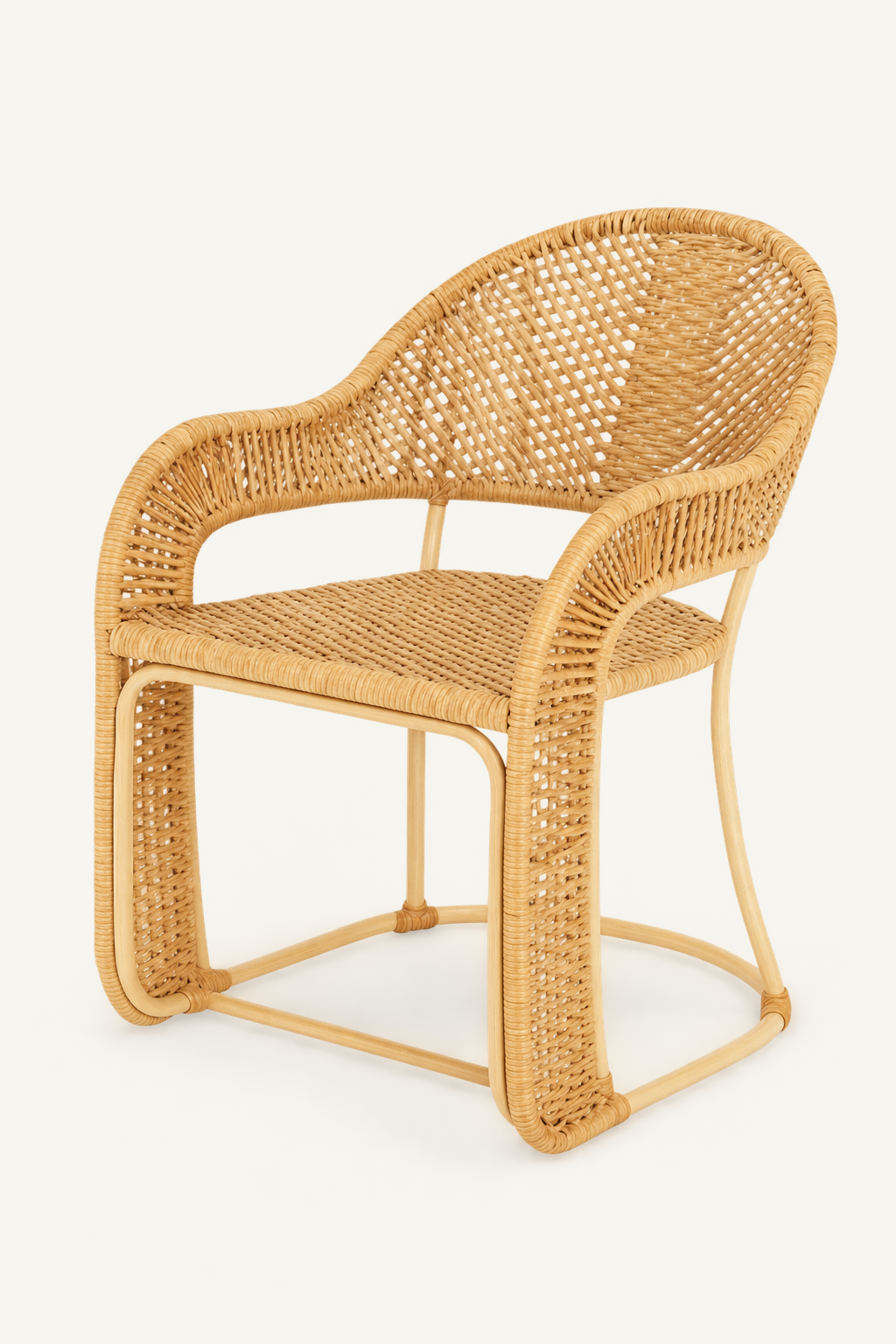
Our Riviera Woven Dining Chair uses a lightweight aluminum frame with a synthetic rattan weave, so it resists rust and rain while staying manageable to move. Its seat sits at 17.7 inches, and its overall height is 31.5 inches (Riviera Woven Dining Chair). For a windy patio, pair a lighter frame like this with a sturdy table and an anchoring method, rather than assuming the chair alone will stay put.
Weight is not the only factor. A chair's footprint, the spread of its legs, matters just as much. Wider legs give a chair a larger base, so it takes more force to lift one side.
Comparing Materials: Rattan, Aluminum and Teak Under Wind and Salt Air
Material choice affects both weight and durability, and Miami's salt air adds a second test. For a deeper breakdown of teak, suar and rattan, see compare teak, suar and rattan in detail. The table below gives approximate weight ranges for a standard dining chair (without cushions) so you can compare wind resistance and maintenance side by side. These are typical ranges across the category, not exact specifications for every chair.
| Material | Approx. Chair Weight | Wind Resistance | Salt-Air Durability | Maintenance |
|---|---|---|---|---|
| Powder-coated aluminum frame with synthetic rattan | 12-20 lb | Fair to good; needs anchoring in gusts above 20 mph | Strong; no rust, but check hardware | Rinse monthly; tighten fasteners seasonally |
| Natural rattan (with or without metal frame) | 10-18 lb | Fair; lighter frames shift in sustained wind | Moderate; fibers can dry and crack | Keep covered; oil or seal annually |
| Solid teak | 25-40 lb | Excellent; dense and low-slung | Strong; develops silver patina | Oil every 6-12 months to preserve color |
| Cast aluminum | 20-35 lb | Very good; heavier than tubular aluminum | Strong; powder coat resists corrosion | Wash with mild soap; touch up chips |
| Wrought iron (powder-coated) | 30-50 lb | Excellent; heaviest common option | Good if coated; rusts at chips | Inspect and repaint chips promptly |
Approx. Chair Weight
Pros and cons by material:
- Aluminum with synthetic rattan: Resists corrosion and is easy to move. The lighter weight means it needs securing in strong gusts. A common pattern is to pair these chairs with a heavy table and a tether system rather than relying on chair weight alone.
- Natural rattan: Warm and handcrafted, but it is lighter and can weaken with prolonged sun and humidity. Best kept under a covered patio where direct rain and salt spray are reduced.
- Solid teak: Dense and heavy, so it holds its position well. It is the most wind-stable natural choice, though it costs more and needs periodic oiling if you want to keep its honey color rather than let it weather to silver.
- Cast aluminum: Heavier than tubular aluminum and often molded into wider feet, which increases the footprint. It resists tipping better than thin-frame chairs while still avoiding rust.
- Wrought iron: The heaviest common dining-chair material and the most resistant to blowing over, but it is difficult to move for storage and rusts wherever the powder coat chips.
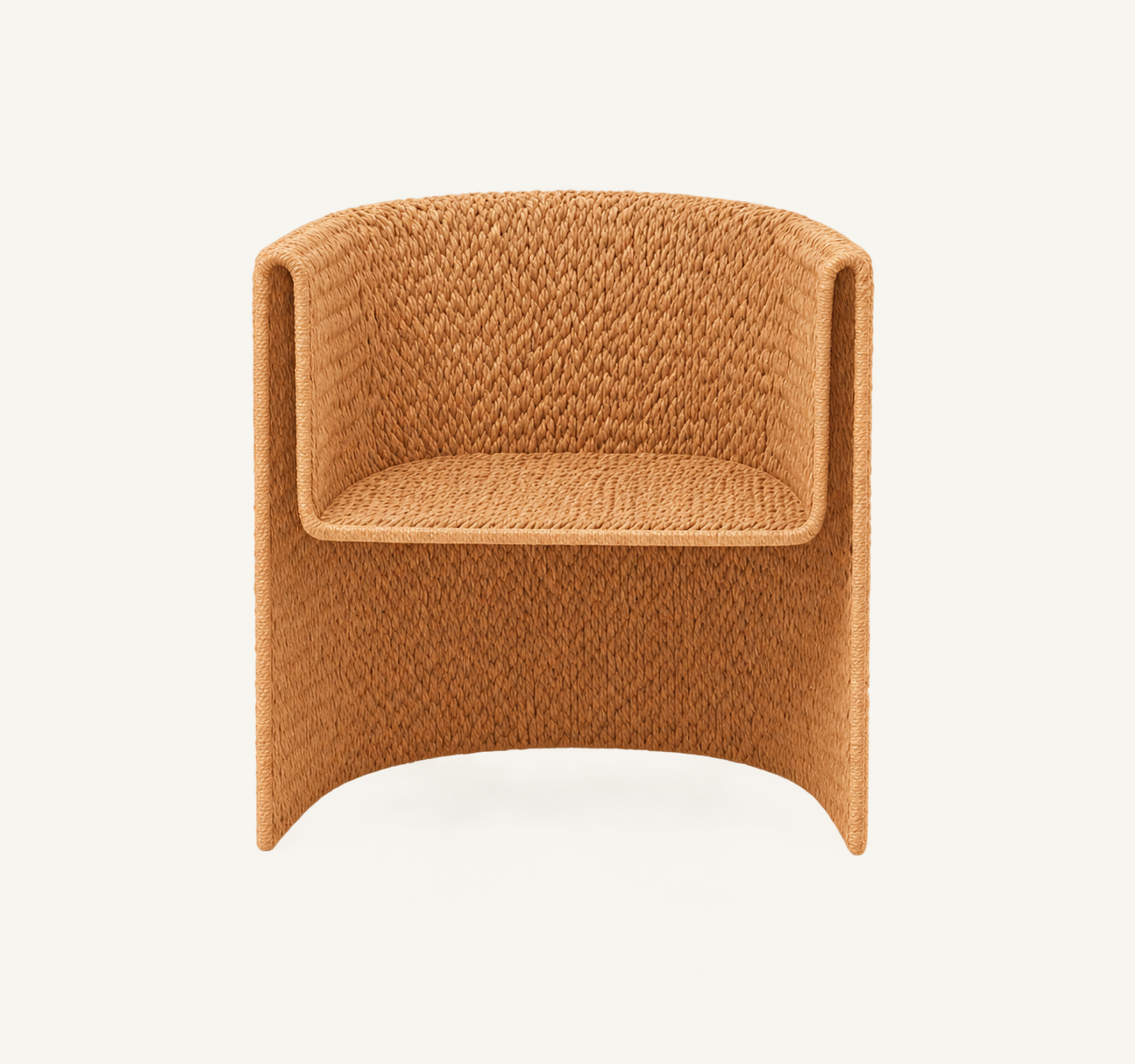
Our Solana Woven Dining Chair is made of natural rattan fibers. The Kora Woven Dining Chair combines natural rattan weave with a metal frame, which adds strength and stability (Kora Woven Dining Chair).
Salt air is a real consideration for outdoor furniture near the coast. Rinsing chairs regularly with fresh water helps remove salt film.
Wind-catching design details to compare:
- Open versus solid backs: A slat or open-weave back lets air pass through, reducing the sail effect. A solid upholstered or wide-panel back catches wind like a sail and is more likely to tip or slide.
- Leg geometry: Splayed legs create a wider footprint and a lower center of gravity than straight vertical legs. A chair with feet spread wider than the seat is harder to tip.
- Stackability: Stackable chairs are easier to move indoors before a storm, but stacked chairs present more surface area to wind if left out. Store stacks in a covered area, not on an open terrace.
- Seat height and center of gravity: A lower seat (around 17 inches) keeps weight closer to the ground than a taller bar-height chair, which is more top-heavy and easier to topple in gusts.
Powder-Coated Aluminum Patio Furniture: Strength Without the Weight
Aluminum frames are light enough to move, and the protective finish is designed for outdoor use.
The tradeoff is that aluminum is light. Expect to anchor or store these chairs during strong wind. A powder-coated frame is an excellent choice for a covered patio, where wind is less of a factor, and a poor choice for an open terrace without a plan for securing it.
Best Material for Outdoor Furniture Cushions in Windy, Humid Miami
Cushions add comfort, but they can also catch wind. Choose cushions that stay secured to the chair during use.
How to Secure Patio Furniture in High Winds
Securing your chairs takes a few minutes and protects them from damage. The right method depends on whether you are preparing for an ordinary windy afternoon or a named storm, and whether you rent or own your space. Here is a practical routine built for Miami patios.
Everyday gust preparation (winds under 30 mph):
- Tie down cushions using straps or ties that attach to the frame. Cushions are the first thing to lift off in a gust, and a loose cushion can knock a chair over as it goes.
- Push chairs into the table and, if the table is heavy, tuck them underneath so the table blocks wind from the side. Watch out: on an open terrace, a light table with chairs tucked in can act as a sail and slide as a unit, separate the set if the table is not anchored.
- Anchor the table with weighted bases or sandbags on the legs so chairs have a stable object to sit against.
- Orient chairs with their backs to the prevailing wind if they must stay out, so the open side faces away from the gust.
- Check the forecast before leaving furniture outside for the day; Miami's afternoon thunderstorms can bring sudden 40-50 mph gusts with little warning.
Renter-friendly anchoring options for dining chairs:
- Weighted sandbags or water-filled bases placed over the chair legs or under the seat frame add hold without drilling into concrete or pavers. A common pattern is two 15-20 lb bags per chair on an exposed terrace.
- Bungee cords or furniture straps run from the chair frame to a heavy table leg or a dedicated anchor point keep chairs from sliding. Choose straps with coated hooks so they do not scratch powder-coated finishes.
- Interlocking or nesting chair styles let you link chairs together or nest them into a compact stack that presents less surface to the wind.
- Freestanding weighted umbrella bases can double as anchor points for a strap, but never tie a chair to an umbrella in a storm, the umbrella itself becomes a wind hazard.
Watch out: ropes and straps stretched across a walking path create trip hazards. Route tethers along walls or under the table, and remove them when the wind event passes.
Hurricane and severe-weather preparation (tropical storm or hurricane watch):
Everyday gust resistance is not storm safety. When a tropical storm or hurricane watch is issued for Miami-Dade County, the goal shifts from keeping chairs in place to removing them as projectiles. Follow National Weather Service and Miami-Dade County emergency guidance:
- Move chairs, cushions, and small tables indoors, into a garage, shed, or interior room, before winds arrive. Even heavy teak chairs can become damaging projectiles in hurricane-force wind.
- Do not rely on straps or sandbags for hurricane conditions. No consumer tether is rated for hurricane-force gusts, and a secured chair can still be torn loose and cause injury or property damage.
- Stack and store what cannot come inside in a sheltered leeward area, and bring in cushions, umbrellas, and any lightweight decor.
- Secure or store the table last, after chairs are inside, since the table is usually the heaviest piece and the hardest to move at the last minute.
For a deeper look at anchoring options and covered-patio setups, see our guide to Best Outdoor Seating for Covered Patios.
Choosing Your Windy-Patio Dining Set Before You Order
Buy the chairs and the table together, and check that their heights and weights work as a set. A heavy table can anchor lighter chairs, but a light table paired with heavy chairs can tip. Measure your patio and confirm there is enough clearance for guests to pull chairs in and out.
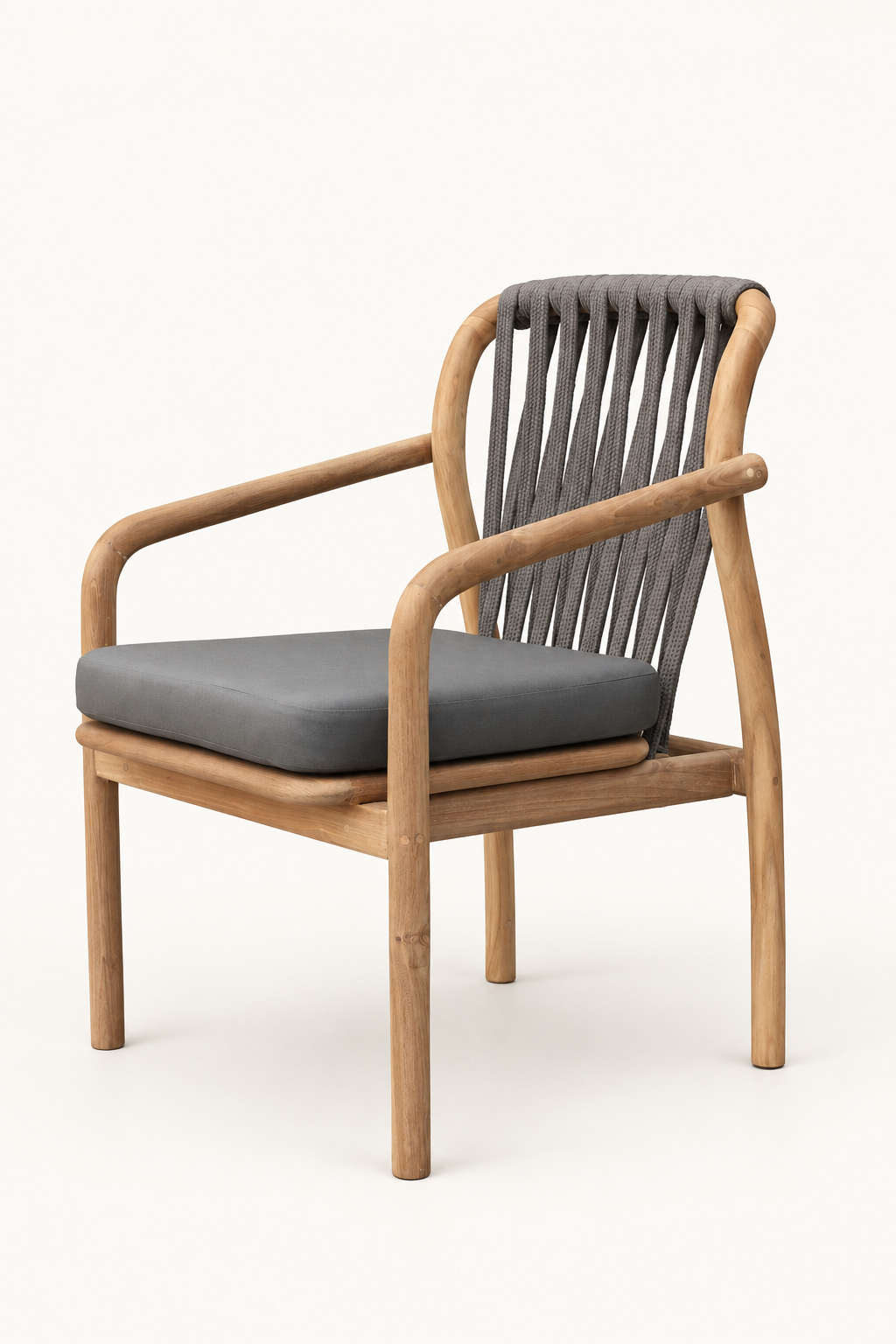
If you are planning a complete dining set, the Bajo Dining Chair pairs a recycled-teak frame with woven rope and a cushioned seat for an open, comfortable profile (Bajo Dining Chair). Its relaxed silhouette works well indoors and out.
Cabana Miami builds handcrafted outdoor furniture with a focus on natural materials and practical construction. Browse our collections to find chairs that suit your patio and your wind conditions.
Frequently Asked Questions
How heavy should outdoor dining chairs be for a windy patio?
For a windy patio, look for dining chairs that feel solid when you lift them and resist tipping when you lean back. A chair that is too light will slide or tip in gusts, while a heavier frame keeps its footprint planted. Aluminum frames with a sturdy base offer strength without excess weight, and a well-built rattan chair on a metal frame can also hold its position well. Check the seat dimensions and leg footprint as well, since a wider base generally resists wind better than a narrow, tall chair. Pair your choice with anchoring or storage on the windiest days.
Are aluminum or rattan outdoor dining chairs better in windy conditions?
Both can work well when the construction is right. Aluminum frames are strong, corrosion resistant and comparatively light, which makes them easy to move but means they may need added weight or anchoring to stay put. Rattan over a metal frame, such as the Kora Woven Dining Chair, combines a natural rattan weave with a metal frame. Choose based on how much weight and openness you want in your space.
How can I keep outdoor dining chairs from blowing away?
Start with chairs that have a wide, stable base and enough weight to resist lifting. Keep chairs pushed in around the table when not in use, and store lighter pieces indoors during storms. For permanent setups, anchor the table and secure seat cushions with ties or clips so they do not lift off. Tuck chairs under a covered area when possible, since shelter reduces the wind load on each piece.
What features make outdoor dining chairs more stable in strong winds?
Look for a broad leg footprint, a low center of gravity and a seat height that keeps your weight centered over the base. Solid, well-joined frames resist racking, and open or slatted backs let wind pass through instead of catching it like a solid panel. Weight matters too, such as the Bajo Dining Chair with its recycled-teak frame. Test the chair by rocking it gently before you buy.


